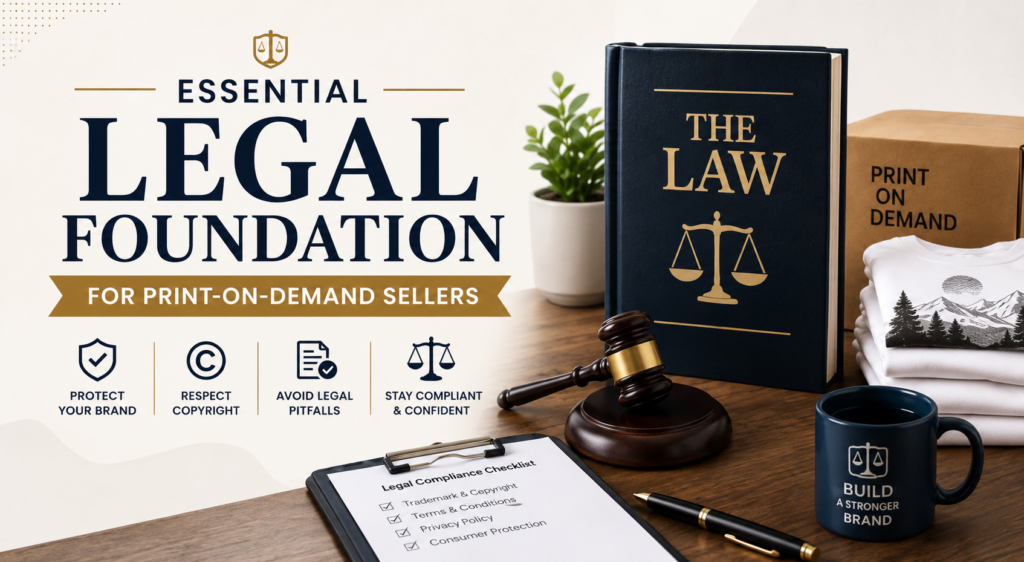
Starting a clothing brand means turning ideas into products people want to wear. But when your designs involve logos, popular characters, quotes, or other recognizable elements, intellectual property laws can get confusing.
Understanding the basics of trademarks and copyrights can help you make more informed decisions, reduce potential risks, and build your brand with greater confidence.
A quick note: This article is for educational purposes only and does not constitute legal advice. Apliiq is not a law firm. Consult a qualified attorney for guidance on your specific situation.
Watch: Essential Legal foundation for Print-on-Demand Sellers
In this video, Marcella discusses common legal questions print-on-demand sellers face, including copyright, trademarks, licensing, and protecting your brand. Watch the video–
1. What’s the Difference Between Trademarks and Copyrights?
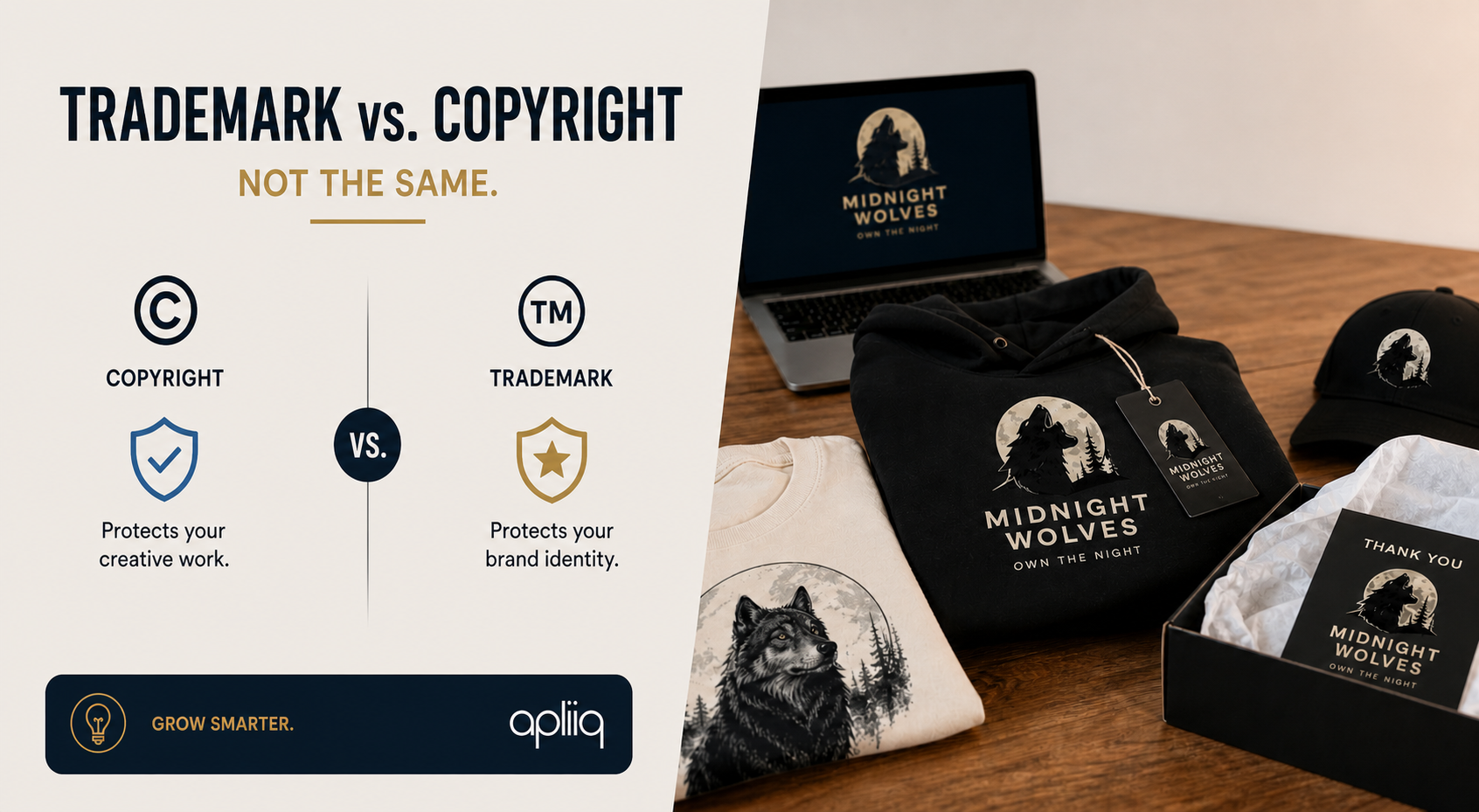
Trademarks and copyrights protect different things, and understanding the distinction can help you avoid common mistakes.
Trademarks protect brand identifiers, such as names, logos, and slogans, when they identify the source of goods or services. For example, a clothing brand may trademark its name or logo to help distinguish its products from competitors.
Copyrights protect original creative works, including illustrations, photographs, artwork, and certain graphic designs. If you create an original illustration for a T-shirt, copyright may protect that artwork.
One important distinction: owning a copyright to your design does not automatically permit you to use someone else’s trademark, character, or protected artwork within it.
2. Can You Use Popular Characters, Logos, or Fan Art on Clothing?
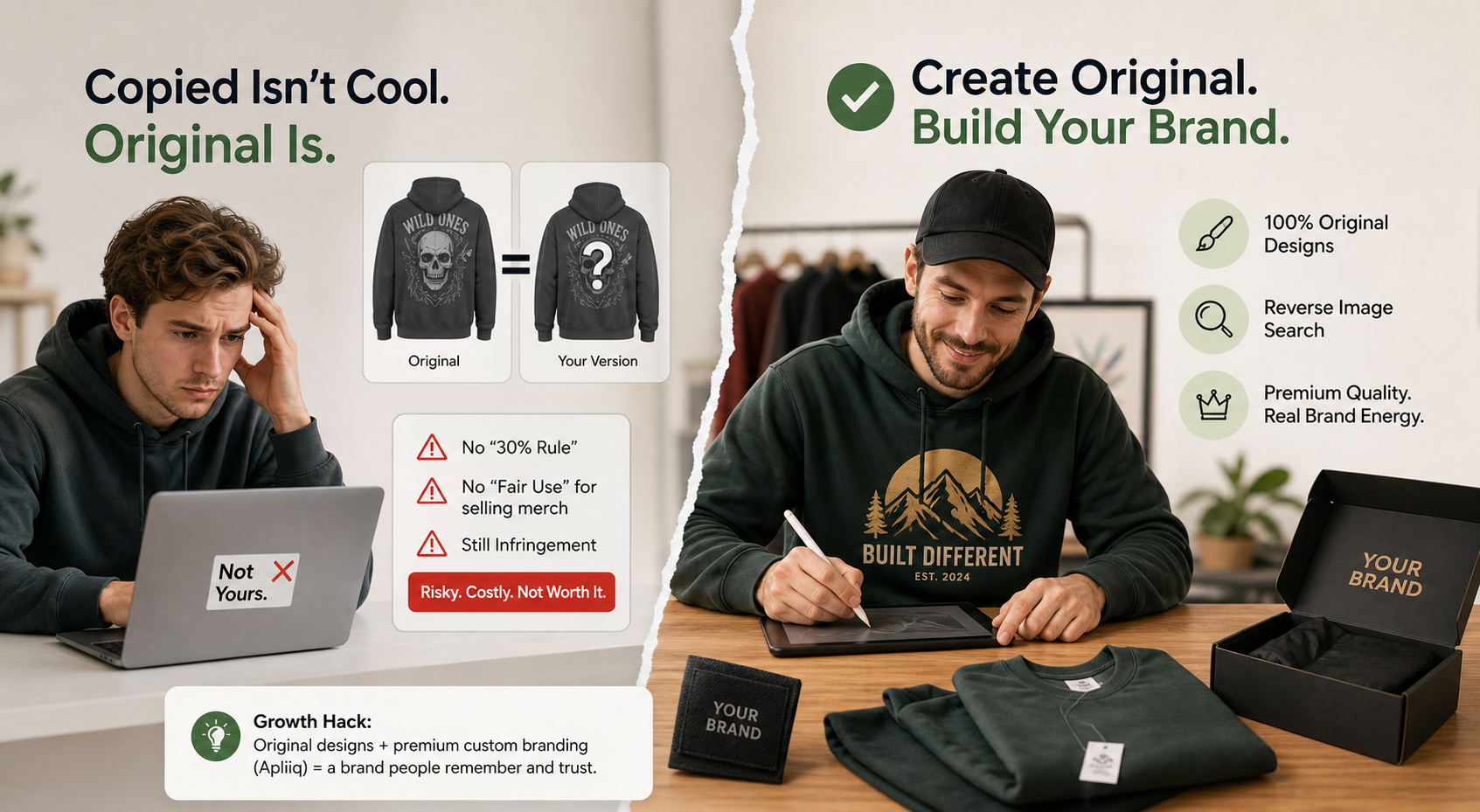
Finding a design online doesn’t mean you’re free to put it on a product and sell it. The same goes for popular characters, sports team logos, celebrity images, and artwork inspired by existing brands.
Here are a few common misconceptions to avoid:
- The 30% rule: Changing 30% of an existing design does not automatically make it legal to use. There is no universal percentage that makes copying permissible.
- Fan art: Drawing a character yourself or changing its appearance does not automatically give you the right to sell merchandise featuring it.
- Sports team designs: Team names, logos, and other identifying elements may be protected by intellectual property rights. Commercial use may require permission or a license.
- Online marketplaces: Seeing other sellers use a design does not mean their use is authorized or lawful.
If you want to sell products featuring someone else’s protected work, investigate whether you need permission or a license before listing the product.
You should also take legal notices seriously. If you receive a cease-and-desist letter, don’t ignore it. Review the claims carefully and consider consulting an intellectual property attorney before deciding how to respond.
3. Does a Trademark Protect Your Brand Worldwide?
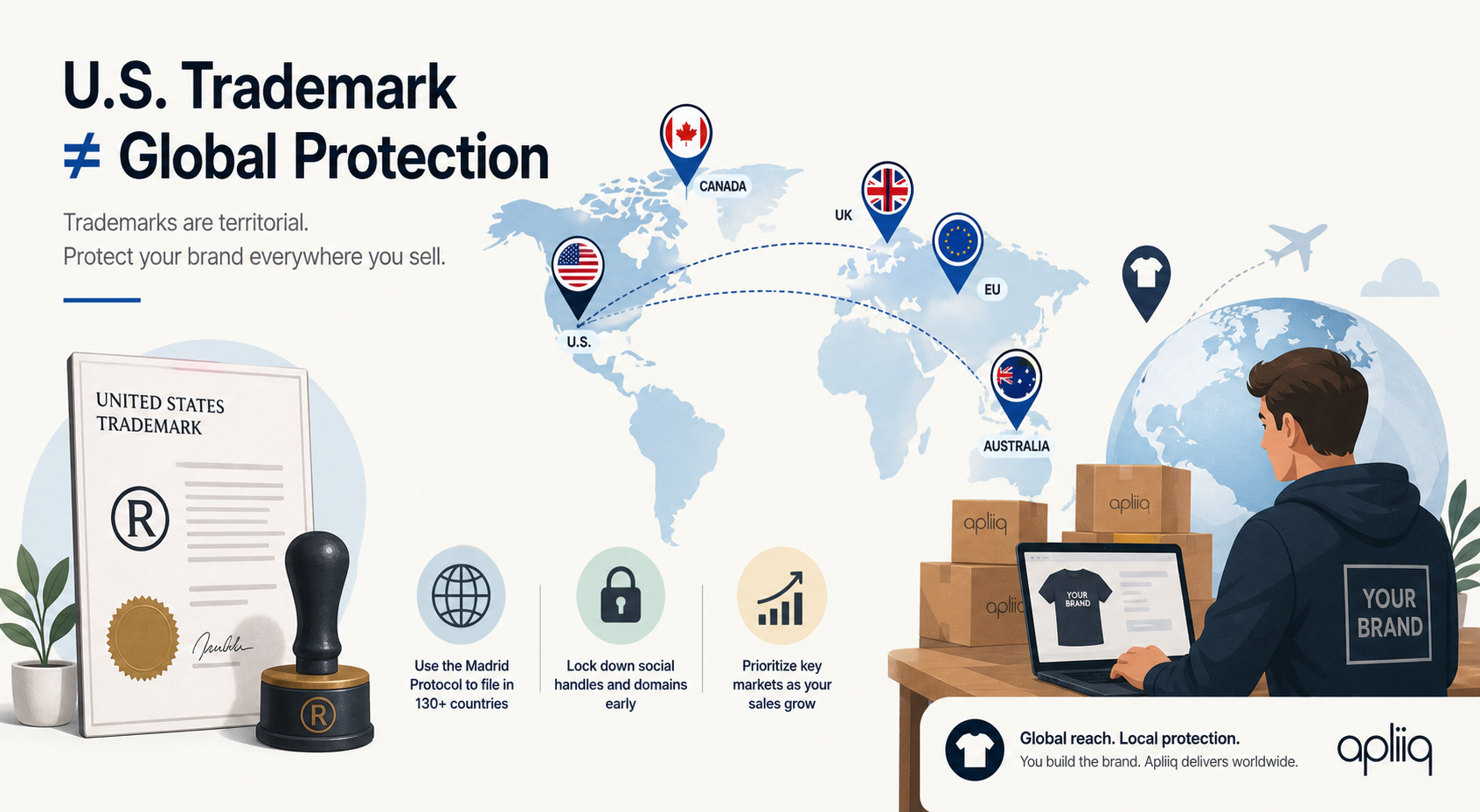
Trademark rights are generally territorial, meaning protection in one country does not automatically extend to every other country.
For example, registering your clothing brand’s name in the United States does not automatically give you trademark protection in the United Kingdom, Canada, or other markets.
If you plan to sell internationally, consider researching existing trademarks in the countries where you want to do business. Depending on your goals, you may also explore international filing options, such as the Madrid System, with guidance from a qualified trademark professional.
Taking these steps early can help you identify potential conflicts and make more informed decisions as your brand grows.
Need Legal Help With Your Clothing Brand?
Have questions about trademarks, copyrights, or protecting your brand? Attorney Marcella Dominguez has helped many brands navigate legal matters and may be a useful resource.
Visit Marcella’s website to learn more about her services.
The Bottom Line
Understanding trademarks and copyrights can help you make smarter decisions about your designs, avoid common misconceptions, and build a stronger clothing brand. When you’re unsure whether you can use a particular name, image, or design, research the rights involved and seek legal advice when needed.
Once you’re ready to create products with your own designs, explore Apliiq’s catalog to find apparel for your brand.