
Print-on-demand makes it easy to start a clothing brand. It does not make it easy to keep good margins. It’s important to consider the cost of the garment, decoration, and shipping. You’ll also have to cover your hidden costs like your time and marketing budget.
Most margin advice stops at “raise your prices” or “know your audience.” That’s fine advice, but it doesn’t tell you what to actually do on Monday morning.
Here are six things you can change this week that show up in your numbers, not just your brand deck.
1. Decide your margin first. Then pick your product.
Most sellers do this backward. They pick a blank they like, add a print, and see what’s left over. By the time they realize the margin is too thin, they’ve already built the listing and started running ads.
Flip it. Before you choose a blank or a print method, decide the margin you want. Say you want to sell a tee for $32 and target a 60% gross margin. That means your total product cost, including the blank and decoration, needs to stay around $12.80 or less. Once you account for fulfillment, shipping, payment fees, and marketing separately, you’ll have a clearer picture of your actual contribution margin.
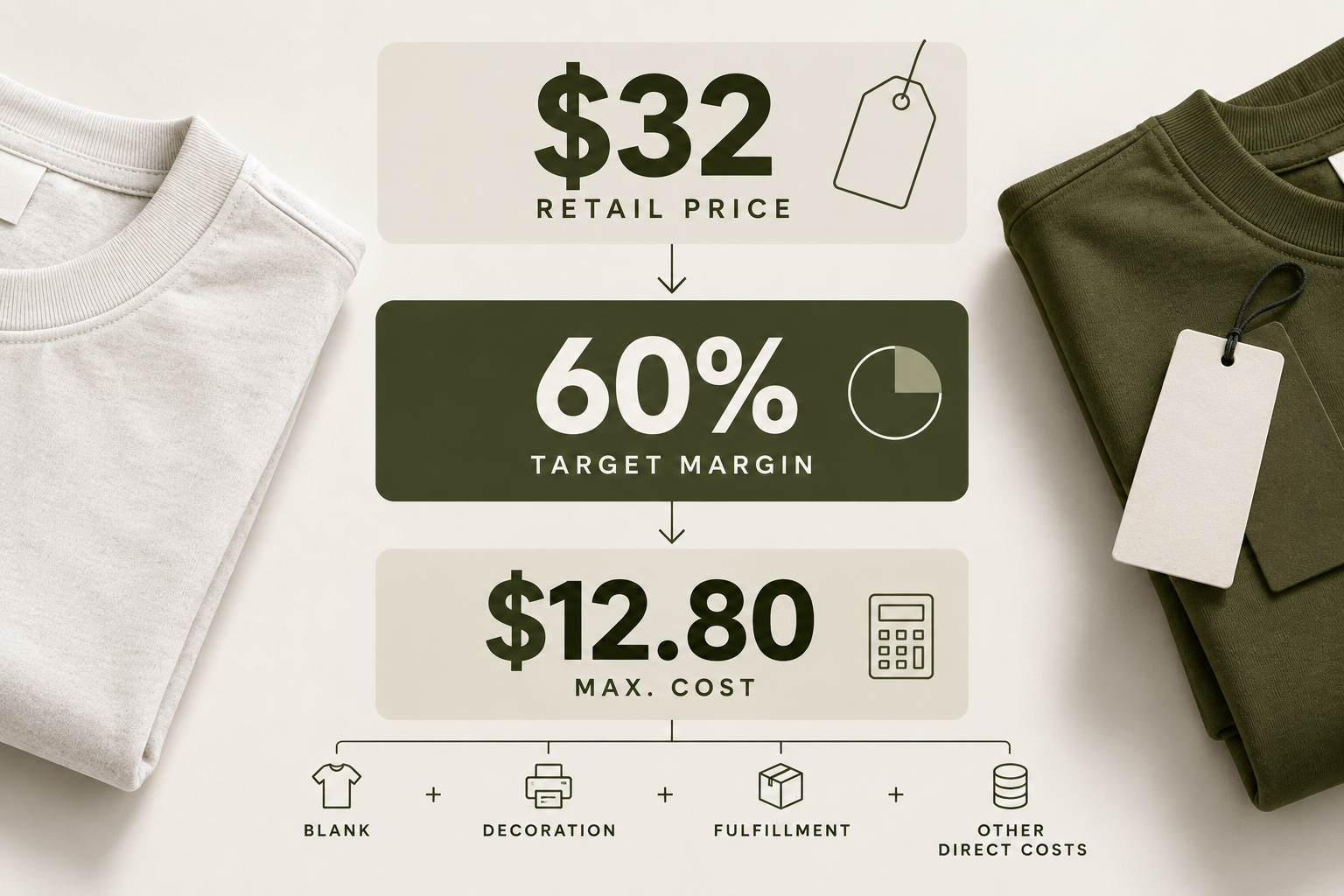
Why it works: You stop building products that look profitable on paper, instead you do the math first and the creative second.
2. Choose products on purpose
Two common mistakes, same root cause: picking the cheapest blank instead of the right one, and adding products without knowing what role they play in your collection.
Start with the blank. A cheaper blank isn’t automatically better for margin. If your brand sells a premium heavyweight tee, it’s fine to pay more for a better blank, as long as it lets you charge enough more to widen the gap, not shrink it. Margin comes from the gap between cost and price, not from finding the cheapest option.
You don’t need to keep your collection small. You need to keep it intentional. Build around a few core products, then add styles that serve a clear purpose: a different fit, price point, season, customer need, or way to wear the design.
A large collection can work. The problem is carrying products that don’t sell, don’t fit your brand, or make your catalog harder to manage. If you have 40 products across a dozen garment types, make sure each one has a reason to be there.
Why it works: Every product earns its spot, whether that’s a core bestseller or a product that fills a specific gap in your collection.
3. Stop losing money on misunderstandings
This one gets skipped a lot, but it’s one of the biggest margin killers in POD. A dissatisfied customer isn’t a small cost. Keep customers happy by presenting the reality of what you’re selling as much as possible.
Most misunderstanding issues come down to two things: sizing surprises and colors that don’t match what the customer saw online. Both are fixable!:
- Post a helpful size chart along with real measurements for the exact blank you use
- Show the garment on more than one body type.
- Order samples so you can see how the finished product looks and fits
- Photograph your samples in real-life settings to give customers a more representative view of the product
Why it works: Reducing unhappy customers or size exchanges by even a few points often helps your margin more than a price increase would.
4. Get customers to buy more, not just pay more
If it costs you $18 to acquire a customer through paid marketing, getting that customer to buy two items instead of one can do more for your margin than trimming a few cents off your product cost. Shipping is part of the equation too. When multiple products ship together, the economics can be more efficient than sending those products in separate orders. The exact savings depend on the products, destination, package, and shipping method, so calculate the numbers using your own order data.
A few ways to make that happen:
- Tee + hoodie sets that go together
- “Complete the look” bundles
- Buy more, save more pricing
- A free shipping threshold set just above your current average order
- Limited drops that pair a new design with something else
- Offer small items like beanies or totes that can increase your average order value
Why it works: You’re making more per customer without spending more to get them.
5. Create smart, not just big
The same design can cost very different amounts to produce, depending on where you print it, how large it is, and how many placements you use. Adding multiple decoration placements can increase production costs, while a single well-designed placement can sometimes create just as much visual impact.
Before you finalize a design, ask one question: what’s the simplest way to print this that still makes it look great? Sometimes one bold placement is enough. Sometimes a woven label or a small embroidered patch can create a stronger branded feel without adding another large decoration placement. Compare the production cost and visual impact of each option before choosing. For some brands, a simple garment with a branded label sewn in can be a more cost-conscious way to create a finished, branded product without adding multiple decoration placements.
Why it works: You cut a real cost without changing the product or the price the customer pays.
6. Don’t let a winning design be a one-off
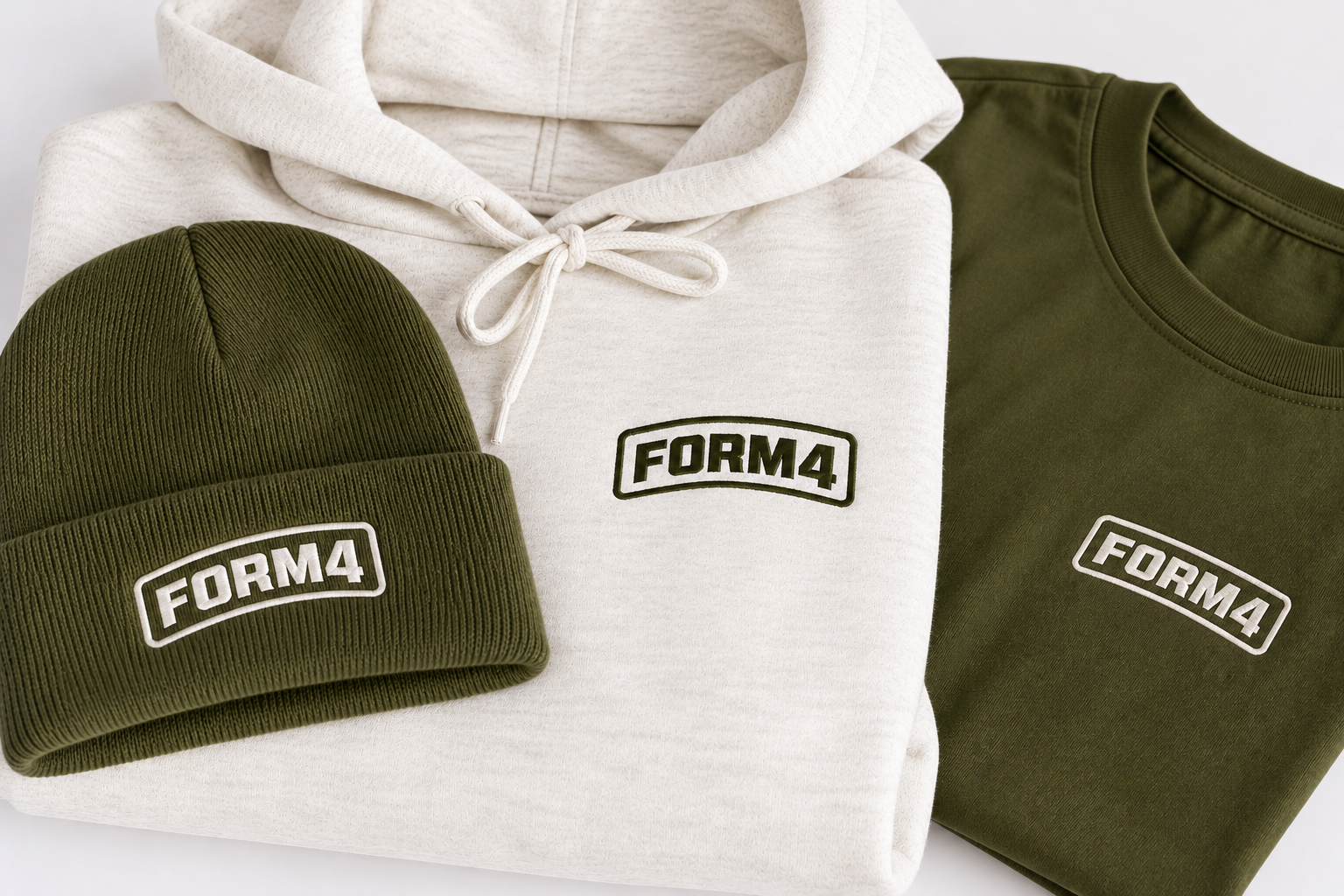
When something sells well, most sellers move straight to the next idea. That means paying the cost of testing and designing something new, again and again, even though you already have something proven.
Instead, get more out of what already works. Try the same design:
- On a different garment weight (lightweight vs. heavyweight tee)
- In new colors
- As a different product- tee, then crewneck, then hoodie
- As a seasonal version
- With a different print or embroidery placement
This is also a good time to think about how you produce it. Some brands keep every design on demand. Others move steady sellers into bulk production once the volume is there, which can lower the per-unit production cost, while keeping new designs on demand until they prove themselves. Private labeling can then add another layer of brand ownership and consistency as the product line grows.
Why it works: You get more value from work you’ve already done, instead of starting from zero every time.
The pattern here
Control what actually moves your margin: what you charge versus what it costs, how much each customer spends, how often you lose money to avoidable returns or replacements, and how much you spend on decoration when a simpler branding approach could do the job.
If you’re building or growing a print-on-demand clothing brand, Apliiq gives you the tools to test products on demand and add services like private labeling, embroidery, DTF, and screen printing as your brand grows. See how Apliiq’s print-on-demand platform works.