
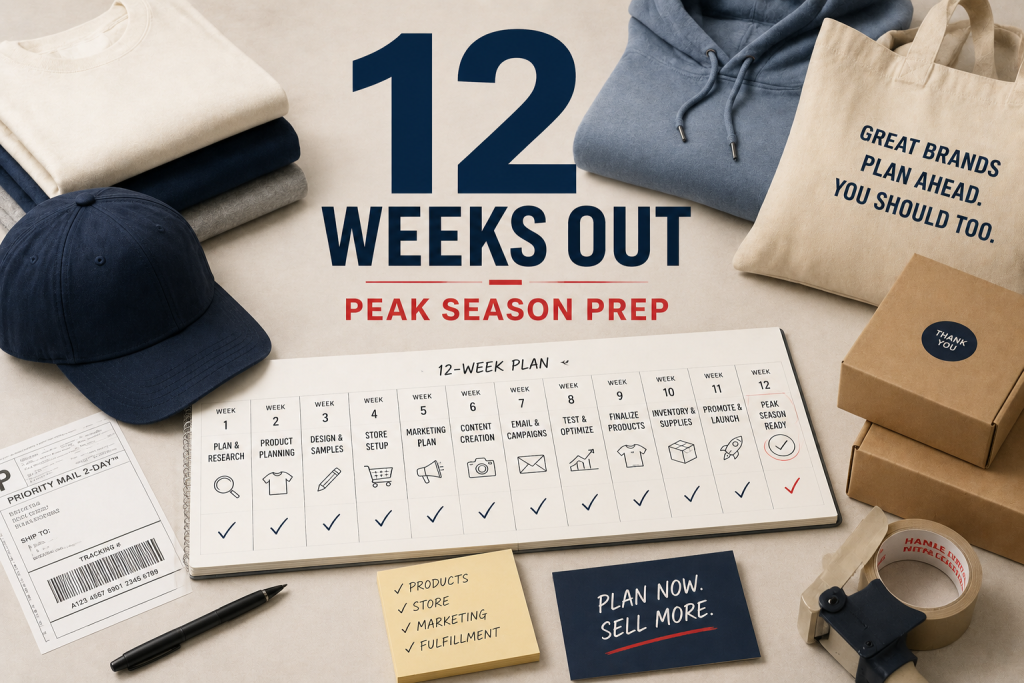
If you sell print-on-demand apparel, you already know the rhythm of the year: a quieter summer, then a sprint from September through Christmas that can make or break your annual revenue. Peak season alone can account for a huge share of total sales for small apparel brands, but only if your labels, products, and store are actually ready when the traffic shows up.
The brands that win peak season aren’t the ones scrambling in November. They’re the ones who started planning in September. Here’s a backward-planning timeline you can use to make sure nothing, from your woven labels to your checkout page, becomes a bottleneck when it matters most.
This kind of planning is a lot easier when you’re not doing it alone. Apliiq works with brand owners specifically on the branded-supplies side of this equation woven labels, patches, embroidery, packaging- and helps partners go from “I have an idea for a brand” to an actual, executed product line. So as you go through this timeline, we’ll point out where a partner like that can take work off your plate.
Why “backward planning” works better than a to-do list
Most prep advice is just a flat list: design labels, order stock, run ads. The problem is that a flat list doesn’t tell you when. Custom woven labels alone can take a few weeks to produce once your design is approved; if you don’t know that until October, you’ve already lost your window for a strong peak season launch.
Instead, count backward from your key date (the start of peak season, or whatever your last “safe to launch” day is) and work out what has to happen by when. Here’s the full timeline.
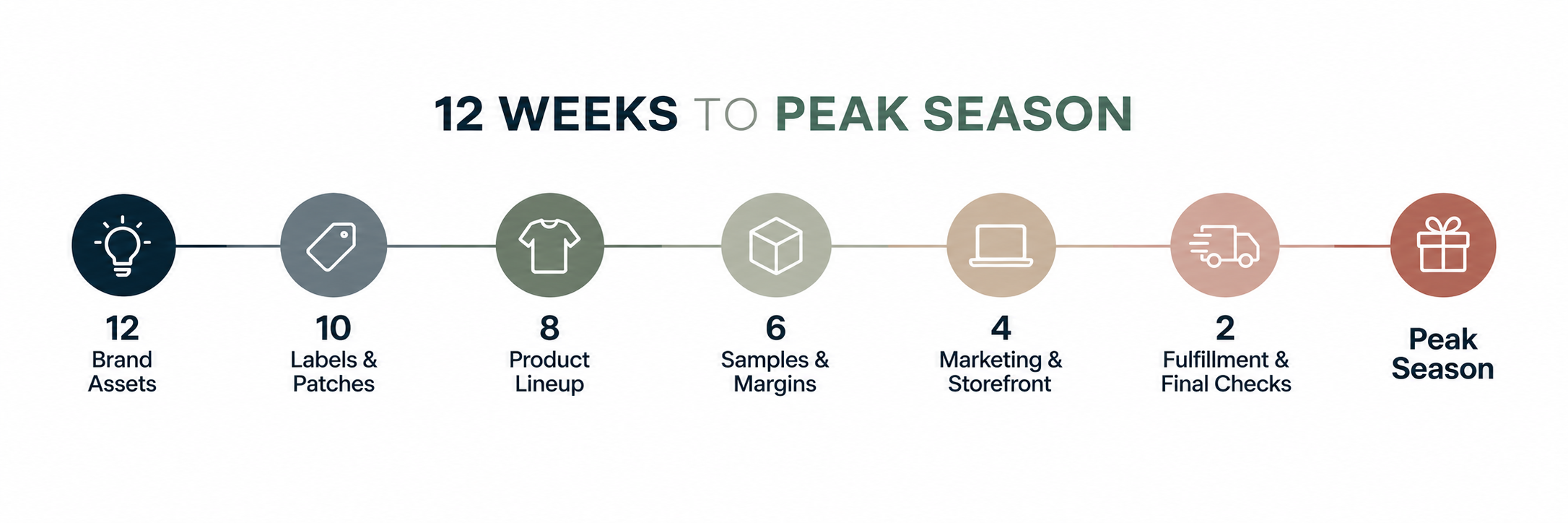
10-12 weeks out: Lock in your brand assets
Before you order anything, get the creative work finished. This includes:
- Your logo and any woven label or patch artwork
- Packaging inserts (thank-you cards, care instructions, hang tags)
- Any embroidery files if you’re adding stitched branding to garments
Give yourself room for revisions. A small artwork change is easy before production and much harder once supplies have already been ordered.
Check your artwork before ordering –
For woven labels, Apliiq recommends preparing artwork at the final label size, using flat colors, avoiding gradients and small details, and supplying high-resolution artwork when possible. Its current guidance supports up to five colors for woven labels.
This is also a good time to decide which branding elements actually belong on each product. You don’t need a woven label, patch, and embroidery on every item. Pick the detail that makes sense for the product.
8-10 weeks out: Order your branding supplies
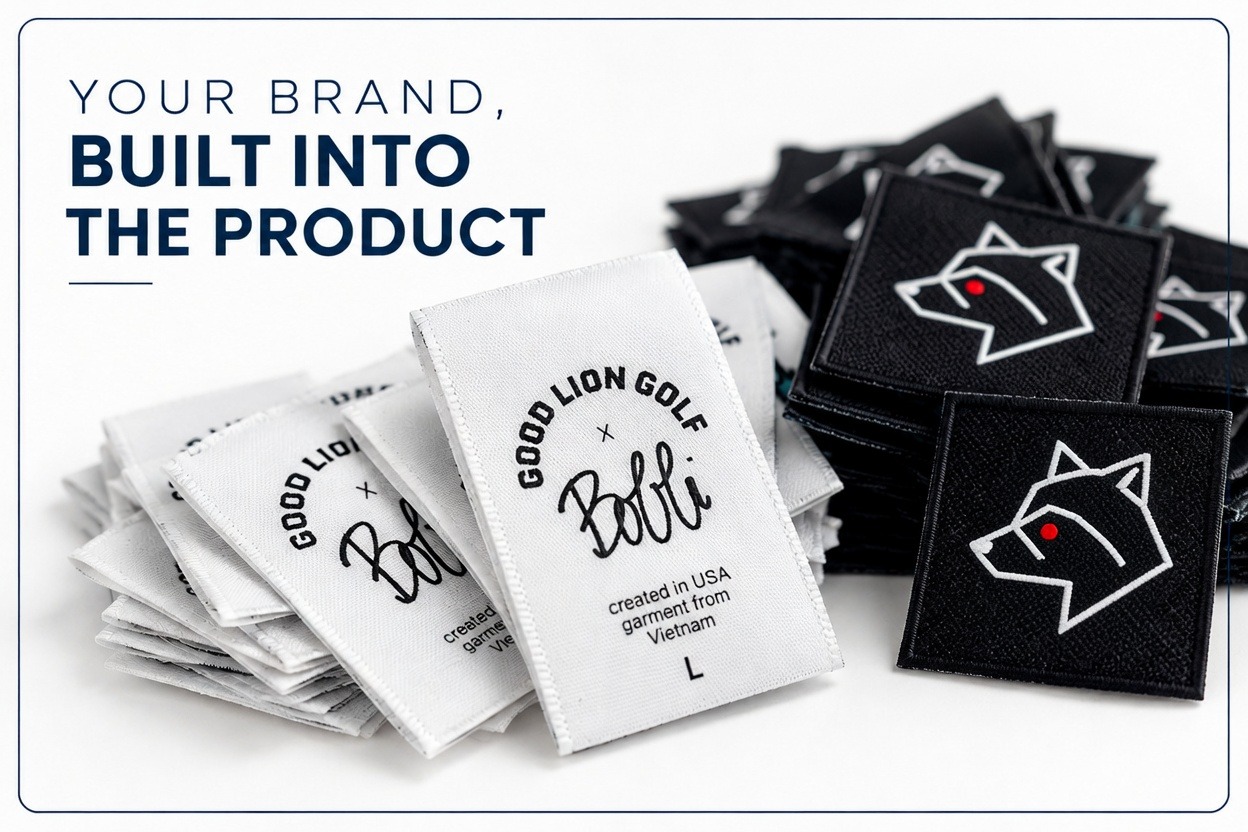
Once your designs are approved, get your order in. This is the step brands most often leave too late, since production takes real time and a late start can mean a compressed launch window or missed inventory for peak season.
Apliiq’s branding model is built around keeping branded supplies available for future production orders. For woven labels, Apliiq makes and stocks the labels, then applies them to products as orders come in.
That can be useful during peak season because you don’t have to build every finished garment before a customer orders it.
7-8 weeks out: Finalize your product lineup and mockups
With your branding underway, turn to the products themselves:
- Decide which items (hoodies, tees, joggers, etc.) get the holiday push
- Order samples if you haven’t tested a particular blank or print method before
- Generate clean, on-brand mockups for your store listings and ad creative
- Check that your key colors and sizes are available
This is also the point to think about limited-edition or holiday-specific designs. Apliiq offers 1,200+ apparel styles, and VIP partners can request new products that aren’t currently in the catalog if there’s a specific style you’re looking for.
5-6 weeks out: Build your marketing calendar
Sales don’t happen just because peak season exists; they happen because you told people about it. Map out:
- Email and SMS send dates, from “coming soon” teasers to day-of reminders
- Ad creative and launch dates for paid campaigns
- Your discount or bundle strategy, decided now instead of improvised in November
Having this calendar locked early also means your creative (mockups, product photos) needs to be ready earlier too, which is exactly why the last two steps come before this one.
4-5 weeks out: Stress-test your storefront
All the marketing in the world won’t help if your site can’t handle the traffic or convert it. Check:
- Site speed, especially on mobile
- Checkout flow – how many steps, where people might drop off
- Product page copy and SEO, since a lot of holiday traffic arrives via search, not just ads
A slow or confusing checkout is one of the fastest ways to lose peak-season traffic that took months of prep to earn.
3-4 weeks out: Confirm fulfillment timelines with your production partner
This is where you need actual dates, not assumptions.
Talk to your production and fulfillment partner about current production times, shipping options, and holiday carrier deadlines for the products you’re selling.
If you’re using Apliiq, don’t use a blanket “two-day shipping” promise on your site. Apliiq’s current fulfillment information says orders are automatically directed to the closest production facility when possible, with a goal of making orders within one week. Its Philadelphia facility update also gives different transit times depending on destination, including 1-day, 2-day, and 3–4-day shipping ranges across different parts of the continental U.S.
Production time and shipping time are separate, so your customer-facing delivery estimate should account for both.
1- 2 weeks out: Load inventory and go live
In the final stretch:
- Get finished products, labels, and packaging into your fulfillment rotation
- Run a full test order end-to-end, from checkout to unboxing, to catch anything broken
- Make sure customer support is staffed for the volume spike; response time matters a lot more when everyone is buying gifts on a deadline
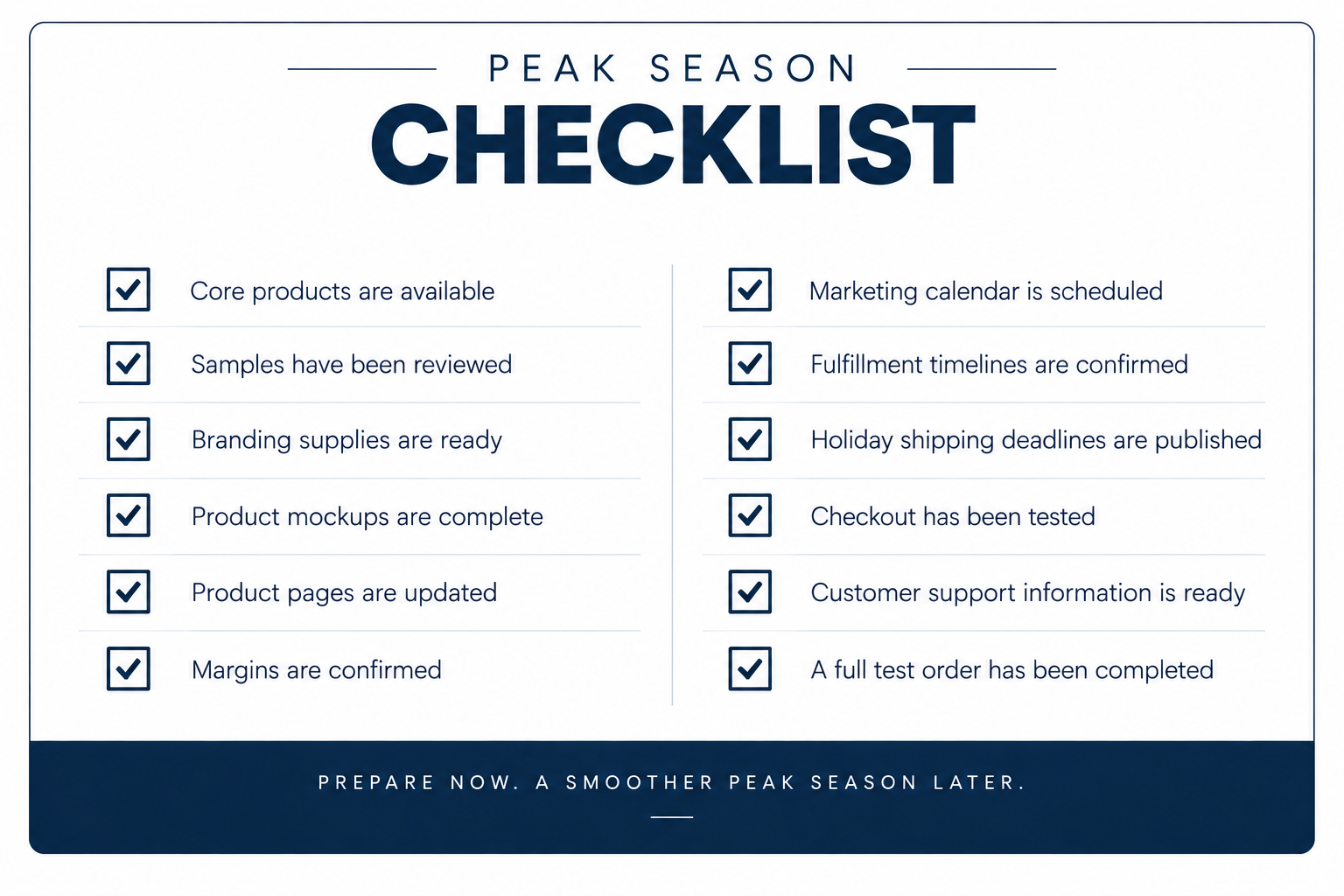
Final peak-season checklist –
The bottom line
Peak season gets easier when the decisions are made before the orders arrive.
The important part isn’t simply starting 12 weeks early. It’s knowing what needs to happen first. Finish your artwork before ordering branding, check samples before promoting new products, know your margins before planning discounts, and confirm fulfillment timelines before promising holiday delivery dates.
For Apliiq brands, woven labels and patches can be produced and stored for future on-demand orders, while the product customizer brings product selection, decoration, branding, and mockups into one workflow.
If you’re building or refreshing a branded apparel line for the next selling season, explore Apliiq’s private labeling, woven labels, custom patches, and on-demand apparel options to see what fits your timeline.