
When someone says they want a “heavyweight t-shirt,” what do they actually mean?
That’s where things get messy.
A 6.5 oz t-shirt is considered heavyweight. A 6.5 oz hoodie would feel surprisingly thin. Yet most apparel websites simply list a fabric weight and expect customers to know exactly what they’re buying.
For brand owners, that creates a problem. Fabric weight influences how a shirt feels, fits, drapes, prints, and ultimately how customers perceive your brand. If you’re building a clothing line, launching merchandise, or choosing blanks for print on demand, understanding t-shirt weights can help you make better product decisions and avoid expensive mistakes.
What Does T-Shirt Weight Mean?
T-shirt weight refers to the density of the fabric used to make the garment. In the United States, it’s usually measured in ounces per square yard (oz/yd²), while many international manufacturers use GSM (grams per square meter).
The higher the weight, the more fabric is used to create the shirt.
Generally speaking:
- Higher weight = thicker fabric
- Lower weight = lighter fabric
- More weight often means more structure
- Less weight often means more drape and breathability
It’s important to remember that weight is only one piece of the puzzle. Fabric quality, yarn type, cotton variety, and construction methods all affect how a shirt feels and performs.
A 4.3 oz combed ringspun cotton tee can feel significantly more premium than a poorly constructed 6.5 oz shirt. That’s why understanding garment weight in context matters.
T-Shirt Weight Categories at a Glance
While there is no universal industry standard, most t-shirts fall into these categories:
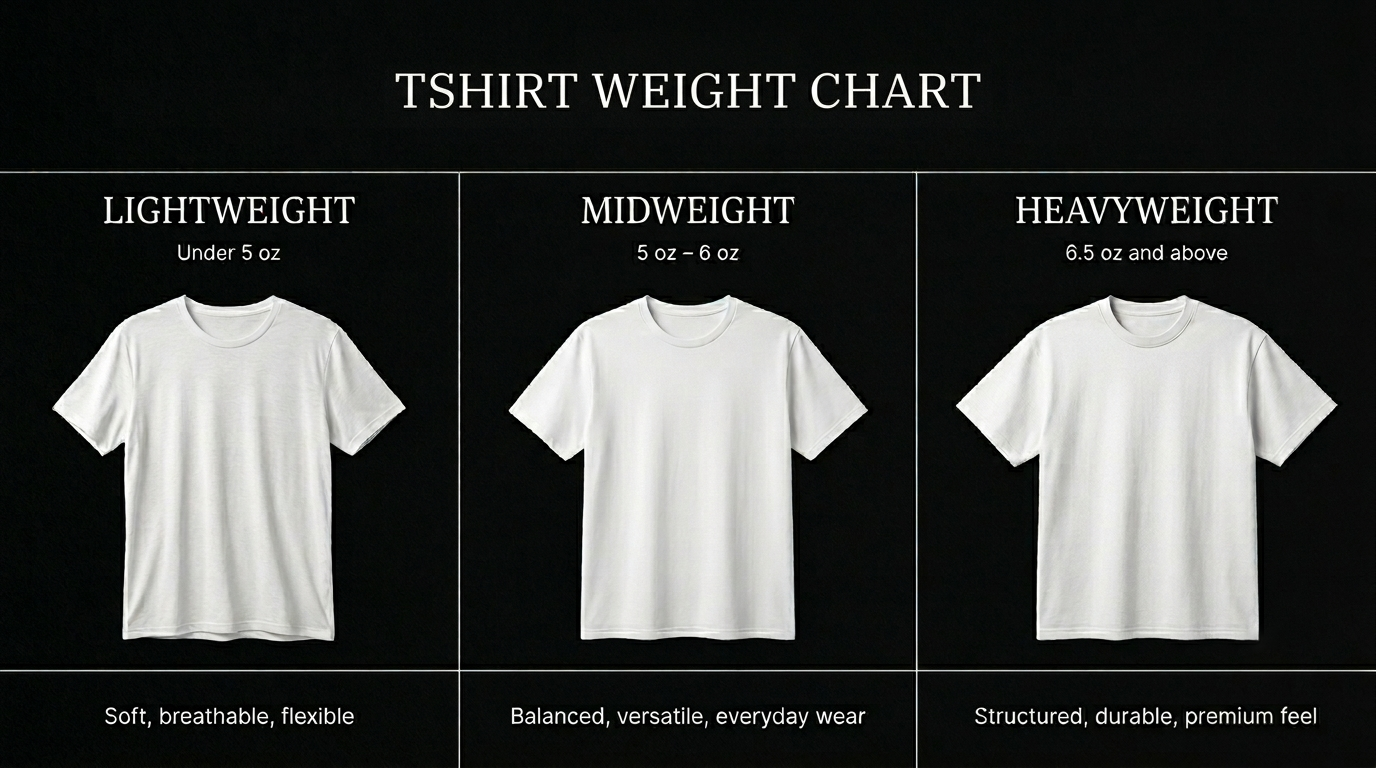
These categories provide a useful framework when comparing blank apparel options and selecting the best t-shirt for your brand.
Lightweight T-Shirts: Built for Comfort and Breathability
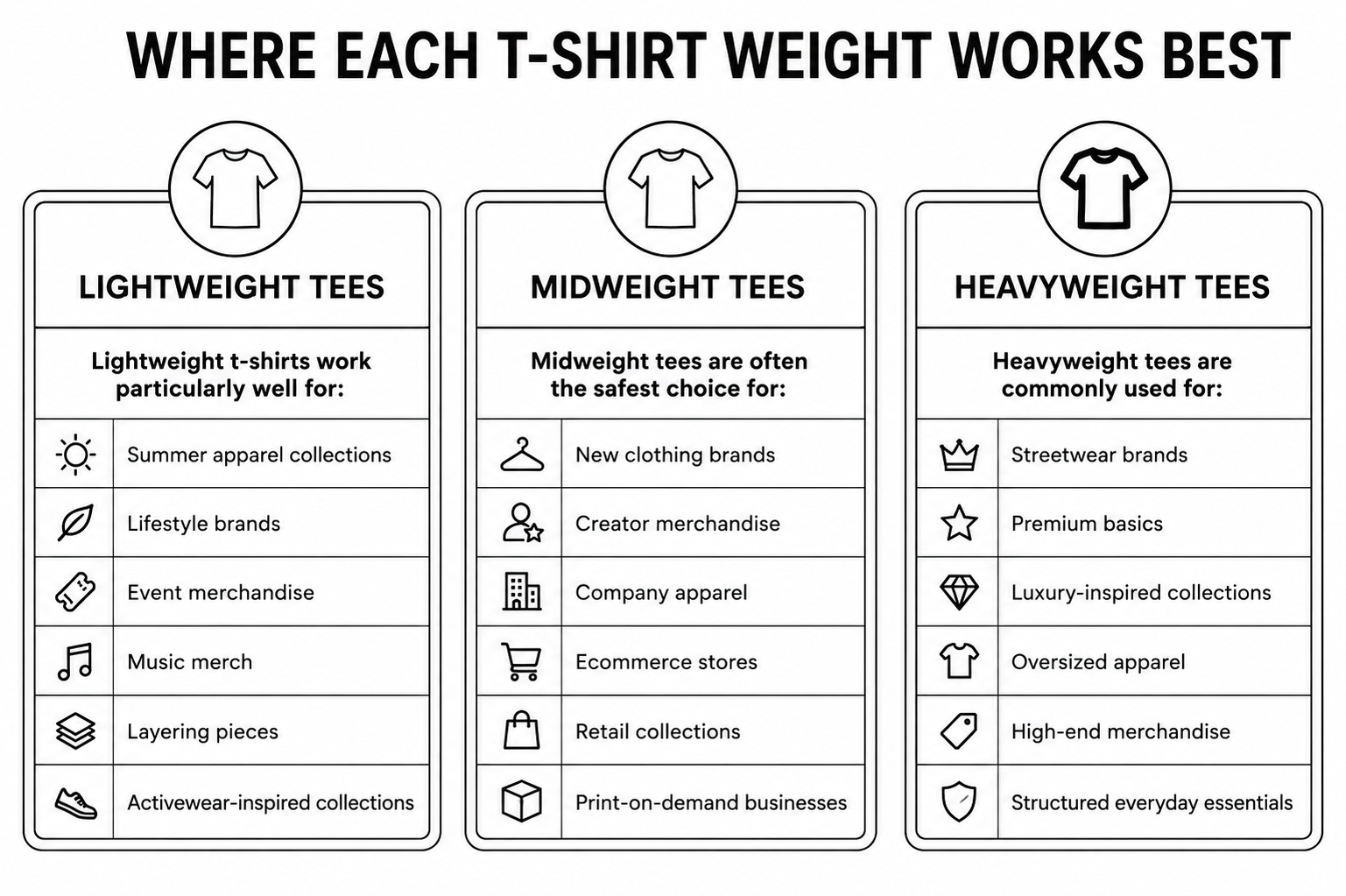
Lightweight t-shirts typically weigh less than 5 oz and are known for their soft feel, relaxed drape, and excellent breathability. For many apparel brands, lightweight tees are the go-to choice for warm-weather collections and fashion-forward basics.
Benefits of Lightweight T-Shirts
One of the biggest advantages of lightweight fabric is comfort. These shirts feel easy to wear, especially in warmer climates where heavy fabrics can feel restrictive.
Lightweight tees often provide:
- Better airflow
- Softer drape
- Greater comfort during summer
- Lower production costs
- A more fashion-focused silhouette
Many modern lifestyle brands intentionally choose lighter fabrics because they create a relaxed, effortless look that customers love.
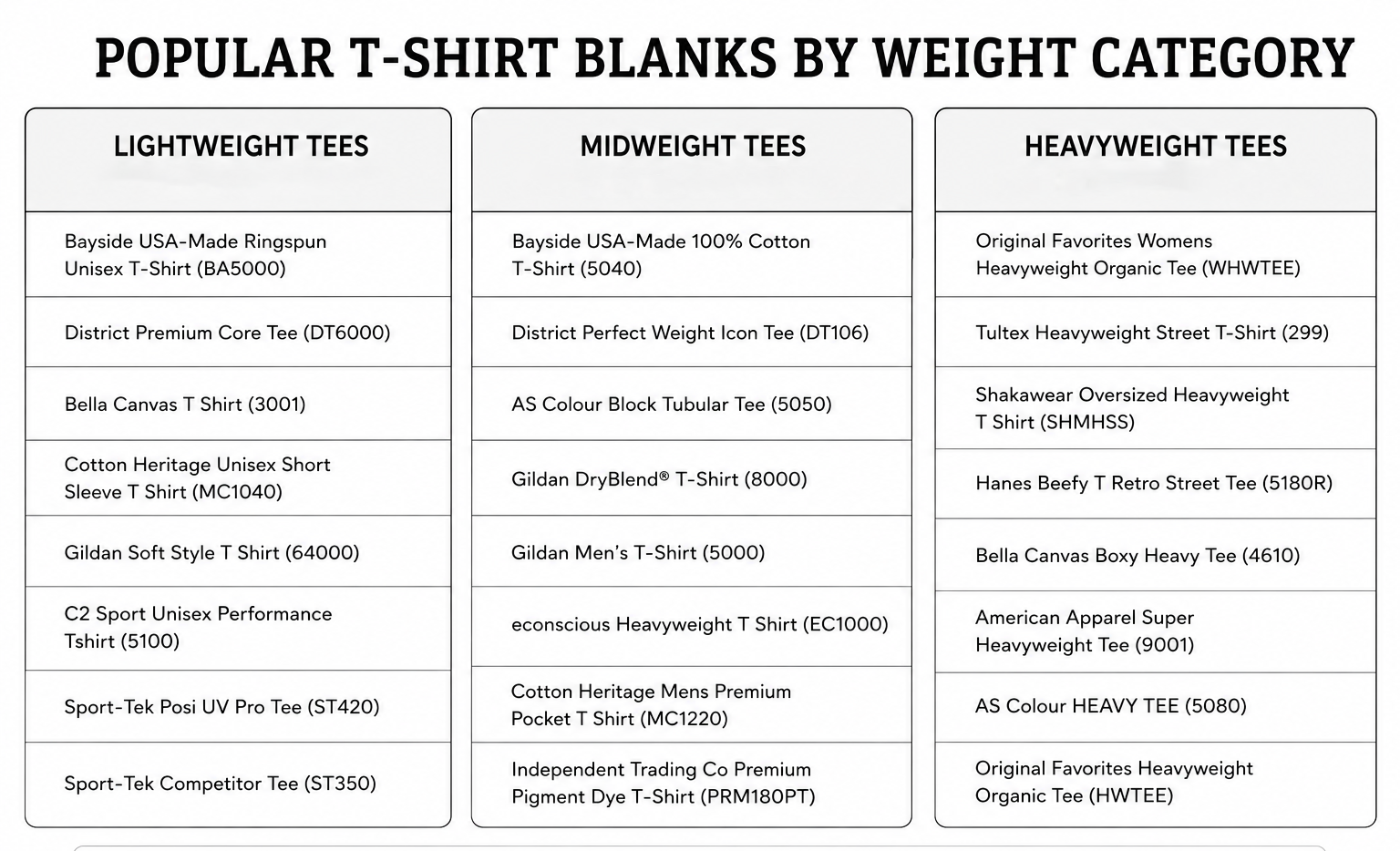
Popular lightweight blanks often include styles like the Bella + Canvas 3001 and Next Level 3600, both known for their soft hand feel and retail-friendly appearance.
The tradeoff is durability. Lightweight fabrics generally won’t provide the same substantial feel as heavier alternatives, which may matter if your customers associate weight with quality.
Midweight T-Shirts: The Industry Sweet Spot
If lightweight shirts focus on comfort and heavyweight shirts focus on structure, midweight t-shirts strike a balance between the two.
Most midweight tees fall between 5 oz and 6 oz, making them one of the most versatile options available for clothing brands and print-on-demand businesses.
Why Midweight Tees Are So Popular
There is a reason so many successful brands build their collections around midweight garments.
They offer:
- Balanced durability
- Comfortable wearability
- Excellent print performance
- Broad customer appeal
- Competitive production costs
For many consumers, a midweight shirt feels “just right.” It isn’t too thin, but it doesn’t feel overly heavy either. This balance makes midweight garments ideal for ecommerce brands trying to appeal to a wide audience.
If you’re unsure where to start, midweight t-shirts usually provide the most flexibility. Popular examples include the AS Colour Staple Tee, Gildan 5000, and Alstyle 1301.
Heavyweight T-Shirts: The Streetwear Standard
Over the past decade, heavyweight t-shirts have become closely associated with premium streetwear and luxury basics.
Most heavyweight t-shirts begin around 6.5 oz and feature a thicker, more structured construction that immediately feels different from lighter garments.
Why Heavyweight Shirts Feel Premium
When customers pick up a heavyweight tee, they notice the difference instantly.
These shirts often provide:
- Increased durability
- Stronger structure
- Better shape retention
- Reduced transparency
- A more substantial feel
This added weight helps create the boxier silhouettes and oversized fits that dominate modern streetwear. For brands selling premium apparel, heavyweight garments can help justify higher price points by creating a more elevated customer experience.
Popular heavyweight blanks include the Shaka Wear Heavyweight Tee, AS Colour Heavy Tee, and Original Favorites Supima Tee.
The Biggest Heavyweight Myth
Many brand owners assume that a heavier t-shirt automatically means better quality, but that’s not always the case. Weight alone doesn’t determine how premium a garment feels. A heavyweight shirt made with lower-quality yarns can feel rough, stiff, and uncomfortable, while a lightweight t-shirt crafted from premium combed cotton may feel noticeably softer and more refined. Fabric construction, yarn quality, finishing processes, and overall manufacturing standards all contribute to the final product. Ultimately, the best t-shirt weight isn’t about choosing the heaviest option available; it’s about selecting the fabric that delivers the experience your customers expect from your brand.
T-Shirt Weight vs Quality
This is where many brand owners get confused. T-shirt weight and t-shirt quality are often discussed together, but they are not the same thing. While fabric weight affects how a garment feels and performs, the overall quality of a t-shirt depends on several other factors, including:
- Cotton quality
- Yarn construction
- Fabric finish
- Dye process
- Stitching quality
- Overall manufacturing standards
For example, ringspun cotton typically feels softer and smoother than traditional open-end cotton because the fibers are spun differently during production. When evaluating blank apparel, don’t look at weight in isolation. A successful apparel brand considers both weight and fabric quality.
How T-Shirt Weight Affects Printing
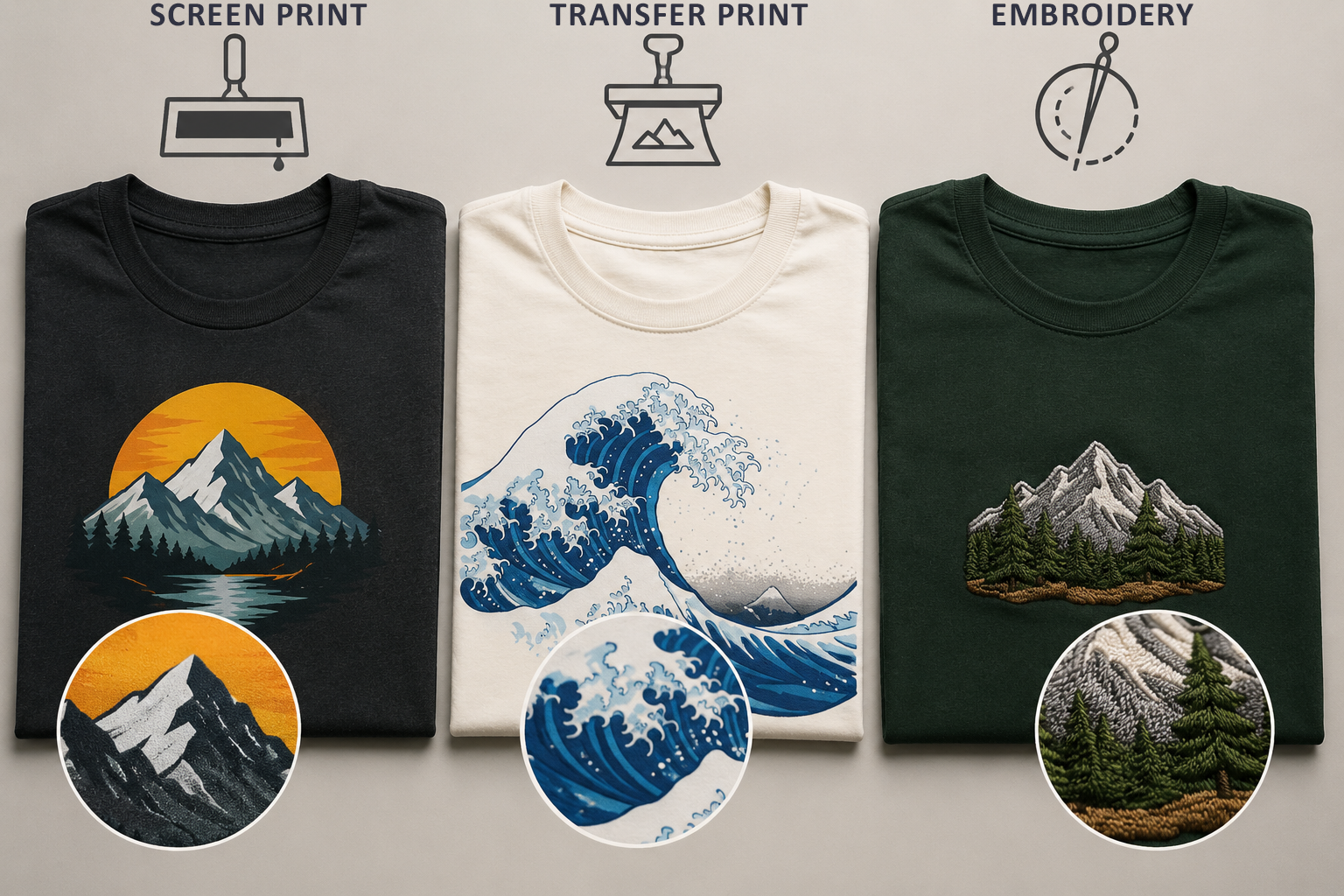
Fabric weight also influences decoration results. If you’re selling custom t-shirts or operating a print-on-demand business, this matters more than most people realize.
| Screen Printing | Transfer Printing (DTF) | Embroidery |
| Heavyweight and midweight shirts often provide a more stable surface for screen printing, helping produce vibrant, durable prints with better ink consistency. The added structure can also reduce fabric movement during production, resulting in cleaner and more reliable print results. | Transfer printing works well across a wide range of t-shirt weights, making it one of the most versatile decoration methods available today. Lightweight and midweight garments are especially popular because they provide a smooth surface while maintaining comfort and wearability. | Embroidery tends to perform best on heavyweight garments because the fabric offers more support for the stitching. Lightweight fabrics can sometimes experience puckering or holes when embroidered designs become too dense. |
How to Choose the Right T-Shirt Weight for Your Brand
Instead of asking, “What’s the best t-shirt weight?” ask a better question:
“What experience do I want my customer to have?”
- If your audience values breathability and everyday comfort, lightweight tees may be the right choice.
- If you’re building a versatile collection that appeals to a broad market, midweight garments often provide the safest option.
- If your brand focuses on premium streetwear, oversized fits, or elevated basics, heavyweight tees may better align with customer expectations.
Final Thoughts
T-shirt weight is one of the most important factors in garment selection, yet it’s often misunderstood.
Lightweight, midweight, and heavyweight shirts each serve different purposes. Understanding those differences can help you choose better products, create stronger customer experiences, and build collections that align with your brand goals.
Before selecting your next blank, think beyond the weight number. Consider the fit, feel, audience, climate, and overall experience you want to deliver. That’s where great apparel decisions are made.